Wireless metro networks use radio links to connect sites across a city or region, while fiber alternatives carry data through optical cables. For most operators, the choice is not simply wireless versus fiber: it is a trade-off among deployment speed, capacity, reliability, route access, and lifecycle cost. Fiber generally offers greater scalable capacity and predictable performance, whereas microwave and millimeter-wave links can be deployed faster where construction is difficult or immediate connectivity is needed. The FCC’s 2024 Communications Marketplace Report describes continuing investment in both fiber and fixed wireless, reflecting their complementary roles. This comparison examines network definitions, technologies, performance, economics, resilience, and practical deployment choices.
Wireless Metro Network Architecture and Fiber Alternatives
A metropolitan-area network (MAN) connects offices, data centers, cellular sites, public facilities, and other locations across a city or nearby region. The Internet Engineering Task Force defines a MAN by its geographic scope and role between local-area and wide-area networks; in practice, the term describes an architecture rather than a single transmission medium. A wireless metro network uses radio links—commonly point-to-point microwave or millimeter wave—to carry traffic between fixed sites. A fiber metro network uses optical fiber, often arranged in rings or diverse routes, to perform the same aggregation and transport functions.
The Federal Communications Commission’s 2024 Communications Marketplace Report documents substantial U.S. investment in both fiber and fixed wireless infrastructure, but the technologies serve different constraints. Fiber is usually preferable where long-term capacity and predictable performance justify civil construction. Wireless is attractive when rights-of-way, terrain, permitting, or time-to-service make a new cable route impractical. Hybrid designs combine the two: fiber forms the high-capacity backbone, while radio links provide selected branches, temporary paths, or backup.
Wireless metro network definition and core characteristics
A wireless metro network is a fixed-site communications system that transports traffic between geographically separated network nodes over licensed or unlicensed radio spectrum. The Institute of Electrical and Electronics Engineers’ IEEE 802.16 standards describe broadband wireless access technologies, while the 3rd Generation Partnership Project (3GPP) specifications define cellular radio systems that can also support fixed wireless access. In metro transport, however, dedicated microwave and millimeter-wave links are often more relevant than consumer mobile broadband.
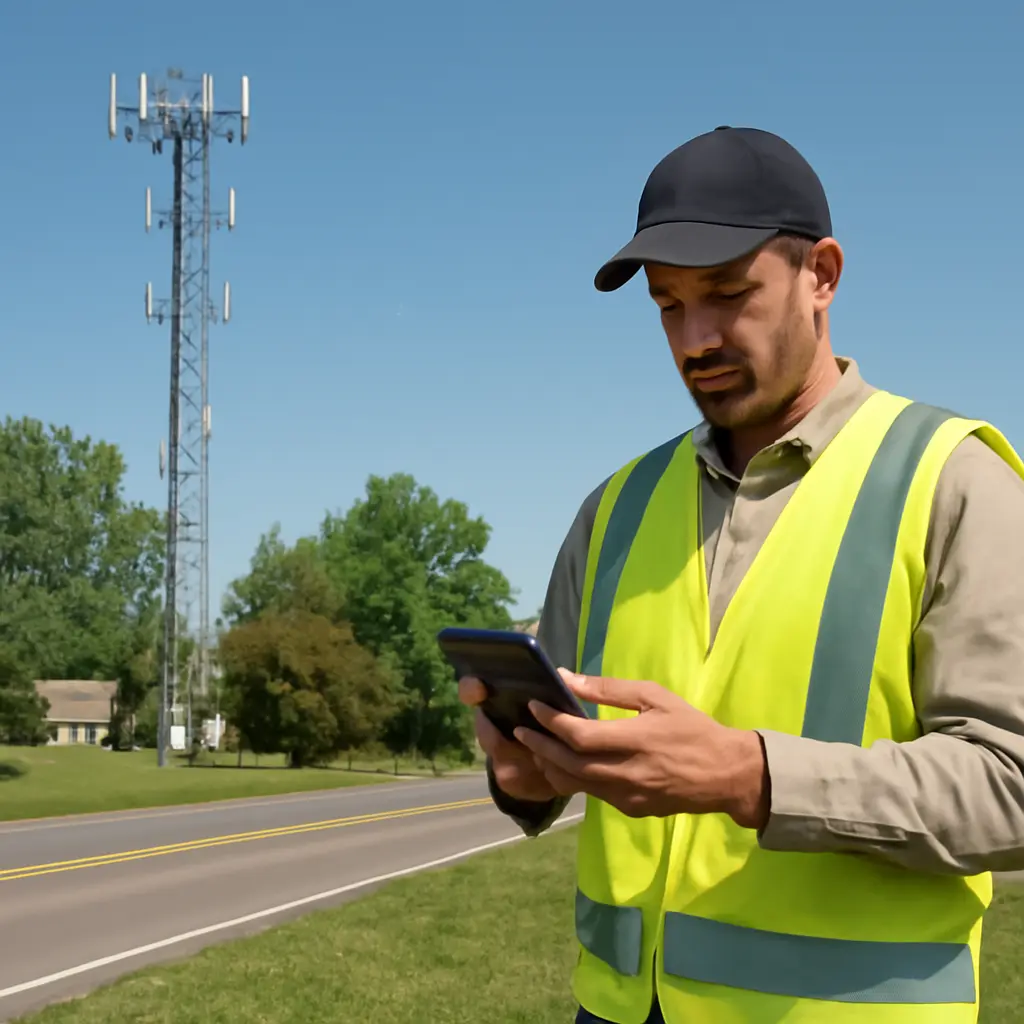
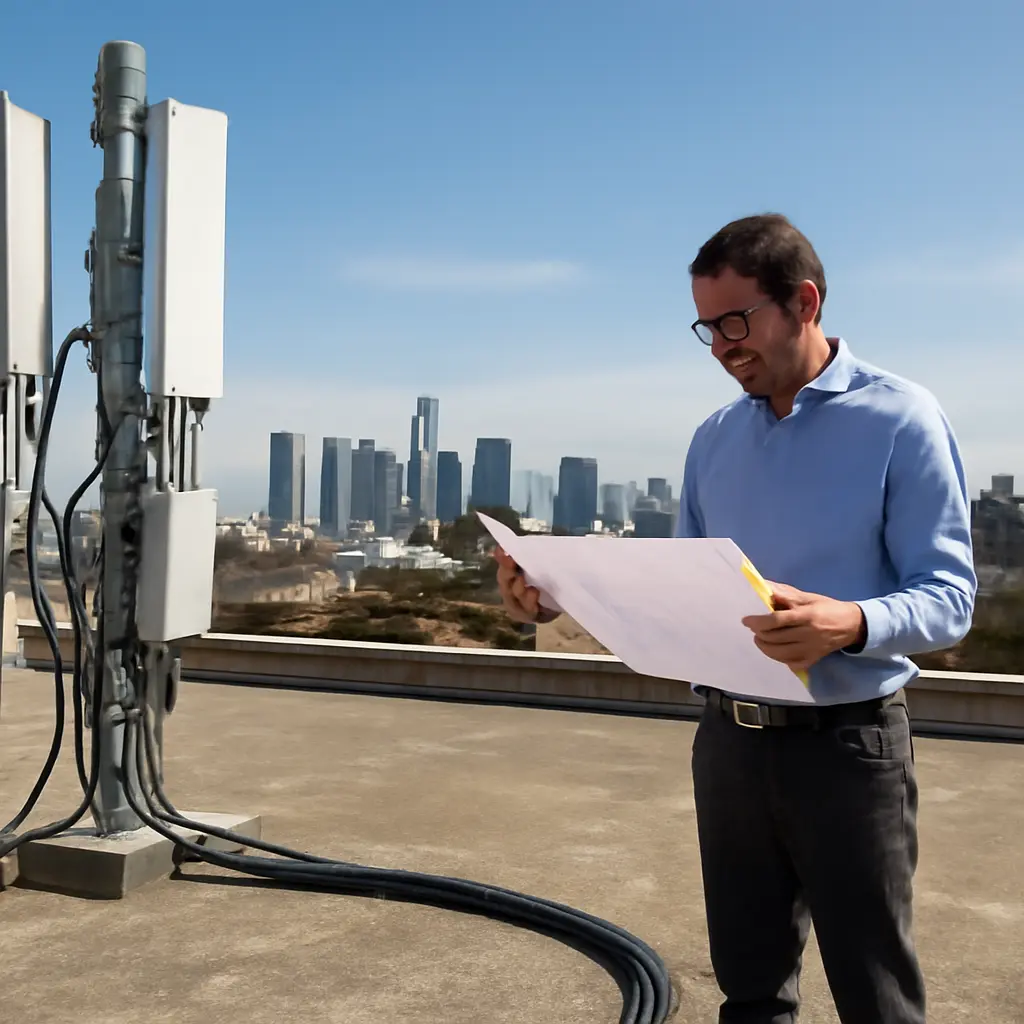
Typical characteristics include rapid installation, dependence on a clear or engineered radio path, use of antennas and rooftop or tower sites, and capacity that varies with frequency, channel width, modulation, and link conditions. The FCC’s spectrum framework distinguishes licensed services, which offer coordinated access rights, from unlicensed bands, where users share spectrum under technical rules. Licensed spectrum can reduce interference uncertainty, but it requires coordination and may involve fees. Radio links can also be affected by obstruction, interference, and weather—especially at higher frequencies.
Fiber metro network definition and core characteristics
A fiber metro network transports data as light through glass optical fiber, using optical transceivers and switching or routing equipment at each end. The International Telecommunication Union’s ITU-T G.652 recommendation specifies characteristics of single-mode optical fiber widely used in telecommunications. Fiber’s low signal attenuation and broad usable spectrum support high capacity over long distances, with upgrades often achieved by changing terminal equipment rather than replacing the cable.
Fiber does not require a clear radio path and is largely unaffected by electromagnetic interference. Its main deployment constraints are physical: route availability, duct or pole access, construction, permitting, and the time required to repair a damaged cable. The Federal Highway Administration’s utility-accommodation guidance illustrates how installing infrastructure in public rights-of-way involves coordination and regulatory requirements. Consequently, fiber can be technically superior but slower or more expensive to extend to a particular site.
Metro network hyponyms and deployment types
The broad terms “wireless metro” and “fiber metro” include several more specific network types. Wireless examples include licensed microwave backhaul, millimeter-wave point-to-point links, fixed wireless access, and cellular backhaul. Fiber examples include leased dark fiber, lit Ethernet services, passive optical networks, and wavelength-division multiplexing systems. These are not interchangeable products: dark fiber provides an operator with an unlit strand to equip, while a lit service supplies managed transmission capacity.
The distinction matters because a fair comparison must match service boundaries and responsibilities. A dedicated radio hop may be compared with a leased Ethernet circuit only after accounting for endpoint equipment, service-level commitments, route diversity, installation charges, and maintenance responsibilities. With the network types defined, the next question is how their performance differs under real operating conditions.
Wireless Metro Performance Compared With Fiber
Performance is determined not only by nominal bandwidth but also by latency, packet loss, availability, jitter, and the ability to scale. Fiber generally provides consistent performance and a straightforward path to higher capacities. Wireless performance depends more heavily on link design, spectrum, distance, interference, and environmental conditions. Neither medium guarantees end-to-end service quality on its own; routers, switches, power systems, and network configuration also matter.
Capacity and scalability
Capacity is the rate at which a link can carry data. Modern optical systems can support very high rates by using multiple wavelengths on a fiber pair, and capacity can often be increased through terminal upgrades. The International Telecommunication Union’s optical transport recommendations cover systems designed for high-capacity transmission, while standards such as IEEE 802.3 define Ethernet rates from local connections through high-speed backbone interfaces.
Wireless capacity can also be substantial, but it is constrained by available spectrum, channel width, modulation, and link margin. Higher-frequency millimeter-wave systems can use wide channels, but their propagation and obstruction characteristics limit practical reach and availability. Operators should compare engineered, sustained throughput—not a vendor’s peak or theoretical rate—and include expected growth, oversubscription, and upgrade costs.
Latency, jitter, and service consistency
Latency is the time required for data to travel through a network; jitter is variation in that delay. A short, well-engineered wireless hop can have low latency, and fiber is not automatically faster for every route. However, fiber links typically provide more stable transmission conditions because they avoid radio interference and weather-related signal changes. For applications such as financial transactions, industrial control, voice, and interactive video, the operator should test end-to-end latency and jitter at busy times rather than relying only on the access medium’s specification.
The U.S. National Institute of Standards and Technology emphasizes that communications performance is a system property involving network design, traffic, and equipment. Service-level agreements should therefore state measurable thresholds for delay, loss, and availability, along with the measurement method and remedies when targets are missed.
Availability and weather exposure
Availability measures the proportion of time a service is operational. Fiber can fail through excavation damage, conduit flooding, equipment failure, or a shared route cut. Wireless links can fail because of equipment or power faults, antenna misalignment, obstruction, interference, or weather. Rain attenuation becomes increasingly important for some higher-frequency radio links, so engineers use path length, frequency, fade margin, and local climate data to estimate availability.
The International Telecommunication Union’s ITU-R recommendations provide methods for modeling propagation and rain attenuation in terrestrial radio links. These models support engineering estimates, not guarantees: actual resilience depends on route diversity, backup power, maintenance response, and whether a nominally redundant path shares the same vulnerable site or corridor.
Wireless Metro and Fiber Cost, Speed, and Deployment
The economic comparison should use total cost of ownership rather than installation price alone. Fiber construction may require trenching, duct work, permits, and restoration of streets or sidewalks, while wireless deployment may require rooftop access, towers, spectrum coordination, and radio equipment. The less expensive option depends on route length, site access, existing infrastructure, capacity needs, and the period over which costs are evaluated.
Capital cost and construction requirements
Fiber capital costs are strongly influenced by civil works and route access. Where ducts or spare strands already exist, fiber can be economical; where a new route must be built, construction can dominate the budget. The U.S. Government Accountability Office has reported that broadband deployment costs and barriers vary with geography, permitting, and access to infrastructure, underscoring why national averages should not replace local engineering estimates.
Wireless links can avoid continuous trenching, but they are not cost-free shortcuts. Costs can include site leases, structural assessments, antennas, radios, power, licensed-spectrum coordination, and ongoing inspection. In dense urban areas, rooftop access and line-of-sight constraints may be more consequential than equipment price. A route survey and a comparable bill of materials are essential before declaring one medium cheaper.
Time to service and operational expense
Wireless can often reach service sooner when suitable sites and radio paths are available because it avoids many excavation steps. Fiber can also be fast to activate if a usable strand or carrier service is already present, but a new build may require extended permitting and construction. Operators should distinguish engineering and procurement time from actual installation time and include the time needed for testing and approvals.
Operating expenses include power, monitoring, repairs, spectrum or site charges, and service-provider fees. Radio equipment may need replacement or realignment, while fiber repair can require specialized crews and access to the damaged route. Maintenance costs are highly site-specific; compare expected annual expenses and repair-time commitments rather than assuming one technology is inherently maintenance-free.
Lifecycle value and capacity upgrades
Lifecycle value compares initial and recurring costs with the capacity and service delivered over the asset’s useful life. Fiber often gains an advantage when demand is expected to rise substantially, because upgrades may involve electronics at the endpoints rather than new civil works. Wireless can offer strong value where demand is moderate, a link is temporary, or the avoided construction cost is large.
A useful financial model includes a range of demand scenarios, upgrade dates, equipment refresh cycles, service interruptions, and residual value. The model should also account for the cost of a future migration: a low-cost radio installation may become expensive if traffic growth later requires fiber construction.
Resilience, Security, and Operational Risk
Network resilience is the ability to continue operating or recover quickly after a failure. Media diversity helps only when the paths are physically and operationally independent. A fiber route and a wireless link may appear diverse but still share a building, power source, aggregation router, or upstream carrier. Security likewise depends on controls across the whole service, not simply whether the medium is guided or unguided.
Physical and path diversity
Fiber resilience improves when operators use separate conduits, entrances, and carrier routes. Wireless resilience can come from a second radio path, a different frequency band, or a radio backup to a fiber primary. The National Institute of Standards and Technology’s contingency-planning guidance recommends identifying critical systems, dependencies, recovery priorities, and alternate processing or communications arrangements.
A meaningful design review should map failure domains: cable corridors, poles, rooftops, towers, power feeds, and aggregation points. Operators should test failover and document recovery objectives. Redundancy that has not been tested may not provide the expected protection during an outage.
Security controls across both media
Fiber is difficult to access without physical intervention, but it is not inherently secure: equipment, cabinets, and endpoints can be compromised, and traffic can be intercepted under some circumstances. Wireless signals propagate through the air and therefore require strong authentication, encryption, access control, and careful radio configuration. The National Institute of Standards and Technology’s security guidance treats confidentiality, integrity, and availability as system-wide objectives.
Recommended controls include encryption in transit, secure device management, configuration backups, monitoring for anomalies, access logging, and timely software updates. For sensitive traffic, use cryptographic protection regardless of whether the underlying connection is fiber or radio.
Real-World Metro Network Use Cases
The most effective medium depends on the site and service requirement. Municipalities, enterprises, carriers, and utilities often mix technologies rather than standardize on one. The following examples illustrate common deployment logic without implying that a specific medium is universally superior.
Cellular backhaul and small-cell connections
Cellular networks need backhaul from radio sites to aggregation points. Fiber is a strong choice for sites with high or growing traffic, particularly where fiber already passes nearby. Microwave can connect sites rapidly or bridge locations where fiber access is delayed. The 3GPP’s 5G specifications support a range of transport architectures, while operators select the backhaul medium based on capacity, availability, and deployment cost.
Temporary links and rapid restoration
Wireless links are useful for temporary venues, construction sites, emergency communications, and service restoration after a cable cut, provided suitable radio sites and spectrum are available. They can restore connectivity while a permanent fiber route is built or repaired. For sustained high traffic, the temporary link may later be replaced or supplemented by fiber.
Enterprise campuses and municipal networks
A campus with existing ducts may favor fiber for buildings that need predictable, high-capacity connections. A city connecting facilities across roads or waterways may use wireless where a new crossing is difficult, while retaining fiber along accessible corridors. In both cases, a hybrid ring or mesh can balance capacity with alternate routing, provided the topology avoids shared failure points.
How to Choose a Wireless Metro or Fiber Solution
Selection should begin with the required service, then evaluate feasibility and lifecycle cost. A procurement process should request engineered designs and comparable service commitments from providers rather than comparing marketing claims. The decision should include a future capacity path and a documented resilience plan.
- Define current and forecast bandwidth, latency, jitter, packet-loss, and availability requirements.
- Survey fiber routes, ducts, poles, building entrances, radio paths, spectrum options, and site access.
- Compare total lifecycle costs, including construction, leases, equipment, maintenance, upgrades, and outage exposure.
- Require service-level terms for performance, repair response, escalation, and planned maintenance.
- Identify physical and operational dependencies, then test failover and recovery procedures.
- Choose a hybrid design where neither medium alone meets cost, timing, capacity, and resilience goals.
Conclusion: Wireless Metro and Fiber Are Complementary
Wireless metro networks offer deployment flexibility and can avoid difficult or slow construction, while fiber alternatives generally provide a stable foundation for high-capacity, scalable transport. Their differences in performance, cost, availability, and risk depend on the specific route and service requirement. A disciplined comparison measures actual throughput and service levels, models lifecycle costs, and examines route diversity rather than relying on generic claims.
For network planners, the practical next step is to map demand and infrastructure, obtain site-specific wireless and fiber designs, and evaluate a hybrid option where it improves time-to-service or resilience. Further reading from the FCC, ITU, IEEE, 3GPP, and NIST can help teams validate spectrum, optical, standards, and security assumptions before committing capital.
Sources: Federal Communications Commission, 2024 Communications Marketplace Report, https://www.fcc.gov/reports-research/reports/communications-marketplace-reports/2024-communications-marketplace-report; Internet Engineering Task Force, RFC 1208: Glossary of Networking Terms, https://www.rfc-editor.org/rfc/rfc1208; IEEE Standards Association, IEEE 802.16 Working Group, https://www.ieee802.org/16/; 3rd Generation Partnership Project, Specifications, https://www.3gpp.org/specifications-technologies; International Telecommunication Union, ITU-T G.652: Characteristics of a Single-Mode Optical Fibre and Cable, https://www.itu.int/rec/T-REC-G.652; International Telecommunication Union, ITU-R P.530: Propagation Data and Prediction Methods Required for the Design of Terrestrial Line-of-Sight Systems, https://www.itu.int/rec/R-REC-P.530; Federal Highway Administration, Program Guide: Utility Relocation and Accommodation on Federal-Aid Highway Projects, https://www.fhwa.dot.gov/real_estate/; U.S. Government Accountability Office, Broadband: FCC Should Improve Its Communication of Risks to Small Broadband Providers, https://www.gao.gov/; National Institute of Standards and Technology, Contingency Planning Guide for Federal Information Systems, https://csrc.nist.gov/pubs/sp/800/34/r1/upd1/final; National Institute of Standards and Technology, Security and Privacy Controls for Information Systems and Organizations, https://csrc.nist.gov/pubs/sp/800/53/r5/upd1/final