Wireless systems fail not only because of faulty radios, but also because engineers misjudge propagation, interference, capacity, power, security, or the conditions in which a network must operate. The Federal Communications Commission (FCC) notes that radio signals can be affected by distance, obstructions, and interference, while the National Institute of Standards and Technology (NIST) emphasizes that wireless performance depends on the environment as well as the technology. Common design mistakes include relying on idealized coverage models, treating signal strength as a substitute for capacity, overlooking coexistence and regulatory constraints, and postponing security and field testing. Avoiding them requires a requirements-led design, realistic link and capacity budgets, disciplined spectrum planning, and validation in the intended environment.
Wireless system design mistakes: definition and engineering context
A wireless system design mistake is a preventable choice or omission that causes a radio network to miss its required coverage, throughput, latency, reliability, power, safety, or security targets under real operating conditions. The IEEE Standards Association defines wireless standards through specifications for radio behavior and interoperability; those specifications do not, by themselves, guarantee a successful deployment. Engineers must also account for the site, users, traffic patterns, antennas, interference, operating rules, and maintenance environment.
The distinction matters at scale. The International Telecommunication Union (ITU) reported that an estimated 5.5 billion people were using the internet in 2024, making dependable connectivity an increasingly important part of public services, business, and daily life. For an individual system, however, success is determined by its own measurable requirements: for example, the percentage of locations that meet a minimum received signal level, the number of simultaneous users supported, or the probability that a message arrives within a deadline.
Requirements and performance targets
Requirements define what the wireless system must accomplish and how success will be measured. A common mistake is to specify only a headline data rate or a vague goal such as “good coverage.” A useful specification states service conditions: coverage probability, minimum throughput at the cell edge, latency percentiles, availability, device density, battery life, mobility, and recovery behavior after failures. These targets should be tied to representative use cases rather than an assumed average user.
For example, a sensor that sends a few bytes every hour has different needs from a voice terminal or a camera streaming continuously. The 3rd Generation Partnership Project (3GPP) defines distinct service categories and performance frameworks for cellular systems, illustrating why one general-purpose metric cannot describe every application. Engineers should also state whether a target applies indoors, outdoors, during movement, at peak load, or in a specified percentile of locations.
The link budget is not a coverage guarantee
A link budget accounts for transmitted power, antenna gains, feeder and implementation losses, path loss, and receiver sensitivity to estimate the power available at the receiver. It is essential for evaluating a radio link, but treating a single calculated value as proof of coverage is a mistake. Real environments introduce shadowing, multipath fading, polarization mismatch, body loss, antenna detuning, and installation variation. A sound design includes suitable margins and validates predictions through measurement.
NIST’s work on radio propagation and channel modeling documents how buildings, materials, geometry, and frequency affect received signals. A model based on open-space assumptions may substantially misrepresent a factory with metal machinery or a building with reinforced concrete. As a practical check, engineers should compare predicted and measured signal levels across representative locations, not just at a convenient test point.
Wireless coverage mistakes: propagation, antennas, and deployment
Coverage is the geographic or spatial availability of a usable radio service, not simply the presence of a detectable signal. The FCC’s consumer guidance explains that obstructions and interference can weaken wireless signals; engineering design must further quantify how those effects influence a particular receiver and application. Coverage failures often arise when teams use overly optimistic propagation assumptions, neglect antenna behavior, or install equipment in locations unlike those used in planning.
Overreliance on free-space and idealized models
Free-space path loss estimates signal reduction in an unobstructed line-of-sight environment. It is a useful baseline, but it does not represent walls, foliage, terrain, reflections, or diffraction. Using it as the sole planning model can lead to too few access points, base stations, or gateways. Even more detailed models carry uncertainty, so the right approach is to select a model appropriate to the frequency and environment, then calibrate it with site data.
A common real-world example is a warehouse where a design performs well during an empty-building test but degrades after tall racks, inventory, and moving equipment are introduced. The relevant environment is the operational one, including seasonal or layout changes where applicable. Site surveys should therefore record construction materials, obstructions, device locations, and expected changes over the system’s lifetime.
Ignoring antenna patterns, placement, and polarization
An antenna converts guided electrical energy into radio waves and has a directional radiation pattern, gain, polarization, and frequency response. A frequent mistake is to choose an antenna by gain alone or assume that an antenna’s nominal pattern remains unchanged after mounting. Nearby metal, enclosures, cables, human bodies, and mounting orientation can alter performance. High-gain antennas can also concentrate energy in some directions while reducing coverage elsewhere.
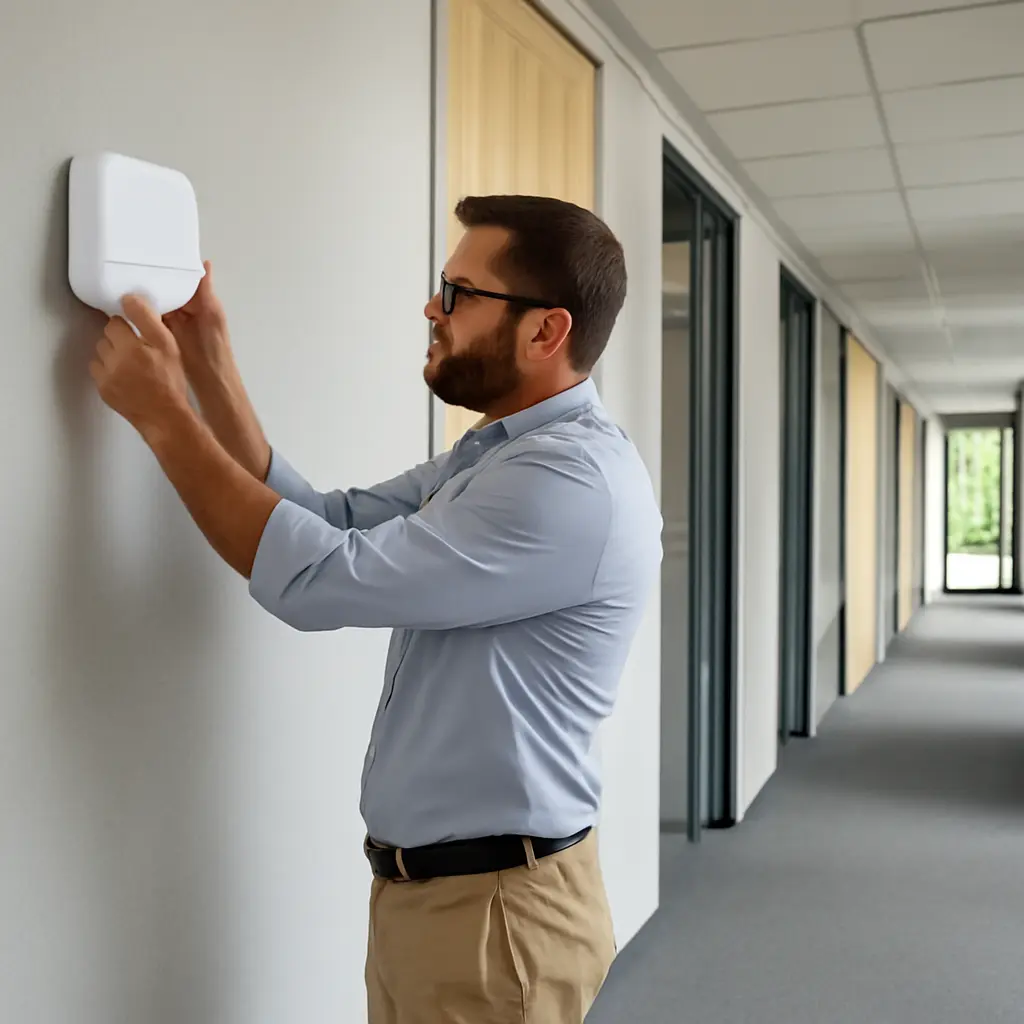
Engineers should assess the complete installed antenna system, including connector and cable losses, ground-plane requirements, enclosure effects, and orientation. For mobile or wearable devices, hand and body detuning can matter; for fixed links, alignment and polarization mismatch can reduce the link margin. Measurement with the final enclosure and mounting arrangement is more reliable than relying exclusively on a component datasheet.
Designing for nominal rather than edge conditions
A coverage plan based on average conditions can leave users at cell edges, behind obstructions, or in interference-prone zones without usable service. Coverage requirements should define an acceptable probability or percentile, because radio conditions vary by location and time. Engineers should test weak-signal locations, handoff boundaries, stairwells, basements, and other areas that are operationally important rather than focusing only on convenient central points.
A heat map can help communicate predictions, but it is not a substitute for a walk test or a field measurement campaign. A useful report pairs maps with measured signal quality, application performance, device orientation, and time of day. For a visual aid, a coverage chart can compare predicted and measured signal levels by floor, zone, or distance from the radio.
Wireless capacity mistakes: interference, traffic, and spectrum
Capacity is the amount of traffic a wireless system can serve while meeting its performance requirements. Strong signal does not necessarily mean high capacity: multiple users share airtime or radio resources, and interference, protocol overhead, retransmissions, and congestion consume usable capacity. Mistakes in capacity planning frequently appear after deployment, when actual device counts and traffic patterns exceed the assumptions used in the design.
Confusing signal strength with service quality
Received signal strength indicates the power arriving at a receiver, but it does not reveal whether the channel is clean or whether enough airtime is available. Signal-to-noise ratio (SNR), signal-to-interference-plus-noise ratio (SINR), packet error rate, retransmissions, and application-level latency provide complementary evidence. A client may show a strong signal yet perform poorly because a neighboring transmitter occupies the same channel or because too many devices compete for airtime.
The Wi-Fi Alliance’s materials on Wi-Fi generations describe improvements in efficiency and capability, but newer technology does not eliminate the need for careful channel planning and client-aware testing. Engineers should test representative devices and applications under realistic load, including roaming and simultaneous traffic, rather than accepting a single signal-strength reading as proof of readiness.
Underestimating peak demand and airtime consumption
Capacity planning estimates how much traffic users generate and how radio resources are shared during busy periods. A common error is to multiply the advertised data rate by the number of users, as though each user receives a dedicated channel. In practice, throughput is shared and varies with modulation, channel width, contention, protocol overhead, retransmissions, and client capabilities.
A more robust plan groups devices by application and estimates busy-hour demand, concurrency, burstiness, and acceptable latency. For example, a conference room with many users joining video calls can impose a much sharper peak than an office with the same number of mostly idle devices. Load testing should reproduce expected peak behavior and include a growth allowance based on the system’s planned service life.
Poor channel reuse and coexistence planning
Co-channel interference occurs when nearby radios share a channel; adjacent-channel interference occurs when transmissions on neighboring frequencies interfere because of insufficient separation or filtering. Both can reduce throughput and increase retries. Engineers sometimes maximize transmit power to “fix” weak coverage, unintentionally enlarging interference zones and making it harder for clients to select the appropriate radio.
Spectrum planning should consider neighboring networks, non-Wi-Fi emitters, channel width, transmit power, and the radio environment over time. The FCC’s spectrum-management framework reflects that radio spectrum is a regulated, shared resource. In unlicensed bands, the absence of an exclusive license does not mean the absence of constraints or competing users. A spectrum survey and post-installation channel review can expose problems that a basic connectivity test misses.
Wireless reliability mistakes: power, mobility, and resilience
Reliability is the ability of a wireless system to deliver its required service consistently, including during movement, congestion, equipment faults, or changing environmental conditions. A design may meet coverage and peak-throughput targets yet still fail because devices lose association during handoff, batteries run down too quickly, or a single point of failure interrupts service. Reliability must be specified and tested as an end-to-end property.
Neglecting power budgets and battery life
A power budget estimates energy consumption across transmit, receive, sleep, processing, and sensing states. Designers sometimes focus on peak transmit current while overlooking how often a device wakes, retries, scans, or maintains a connection. Weak coverage can increase transmission time and retransmissions, which may shorten battery life even when the radio’s nominal sleep current is low.
Battery-life claims should be calculated from a realistic duty cycle and validated with the final firmware, network settings, battery chemistry, and temperature range. The Bluetooth Special Interest Group’s low-energy specifications support low-power operation, but application behavior and connection parameters still determine actual energy use. Measure current over representative operating cycles instead of extrapolating from a brief bench test.
Treating roaming and mobility as afterthoughts
Roaming is the transition of a client between access points or cells while maintaining service. It depends on client behavior, network configuration, signal overlap, authentication, and application tolerance for interruption. A design tested only with stationary devices may exhibit dropped calls, stalled sessions, or delayed control messages when users move between coverage areas.
Mobility testing should include walking and vehicle routes where relevant, transitions between floors, and movement through doors or other signal boundaries. Engineers should measure interruption time and packet loss at handoff, not merely confirm that the device eventually reconnects. For safety-critical or time-sensitive systems, the acceptable interruption must be specified before choosing the architecture.
Failing to design for outages and recovery
Resilience is the ability to maintain or restore service after a fault. A wireless system can have excellent radio coverage but remain fragile if it depends on one controller, gateway, power supply, backhaul link, or configuration service. Redundancy should be matched to the consequences of failure, and failover behavior must be tested under realistic conditions.
The U.S. National Institute of Standards and Technology’s cybersecurity and contingency-planning guidance treats recovery as part of system planning, not an improvised response. For wireless deployments, that means documenting backup power, alternate routes, spare equipment, configuration backups, monitoring thresholds, and recovery procedures. A planned outage exercise can reveal dependencies that a normal operational test will not.
Wireless security and compliance mistakes: threats, standards, and operations
Wireless security protects communications, devices, credentials, and network services against unauthorized access, interception, disruption, and misuse. It is a design attribute, not a final software checkbox. Security and compliance failures can undermine an otherwise functional radio system, especially when devices are deployed for years, operate unattended, or connect to important business and public infrastructure.
Adding security after the architecture is fixed
Security-by-design means including threat analysis, identity, authentication, encryption, key management, secure updates, and logging in the initial architecture. A common mistake is to rely on a shared password, leave debug interfaces exposed, or assume that a device is safe because it uses a short-range or proprietary radio. Wireless signals can extend beyond the intended premises, so physical proximity should not be treated as a security boundary.
NIST’s Internet of Things guidance recommends capabilities such as device identification, configuration control, data protection, logical access control, software update, and cybersecurity-state awareness. These capabilities are especially relevant to long-lived sensors and industrial devices. A deployment plan should state how credentials are provisioned and revoked, how updates are authenticated, and what happens when a device can no longer receive security support.
Overlooking interference and denial-of-service risks
Radio-frequency interference can be accidental or deliberate, and both can prevent a receiver from decoding legitimate transmissions. The Federal Emergency Management Agency (FEMA) and public-safety agencies have highlighted the importance of dependable communications during emergencies, when networks may face unusual congestion or disruption. Engineers should assess interference exposure, establish monitoring and incident-response procedures, and avoid assuming that encryption alone ensures availability.
Mitigations depend on the system and may include frequency diversity, wired fallback, local autonomy, filtering, directional antennas, or alternate communication paths. Any mitigation must comply with applicable radio rules and be tested for its effects on legitimate users. The objective is not to promise immunity from interference, but to understand failure modes and preserve essential functions where feasible.
Ignoring spectrum rules and equipment certification
Wireless equipment operates under jurisdiction-specific requirements for frequency, power, emissions, channel access, and certification. Engineers may mistakenly assume that a radio module’s approval automatically covers every antenna, enclosure, or installation. Changes to antenna gain, cabling, power settings, or operating region can affect compliance, and unauthorized configurations can create harmful interference or delay market access.
The FCC regulates radio-frequency devices in the United States, while other regions apply their own rules through authorities such as the European Telecommunications Standards Institute and national regulators. Design reviews should verify the intended operating bands, applicable certification conditions, antenna restrictions, and installation requirements. Compliance checks belong early in product planning, before a design is locked or a deployment is scheduled.
Wireless system validation mistakes: simulation, field testing, and lifecycle
Validation determines whether a wireless design meets requirements in its intended operating environment. A frequent mistake is to treat simulation, a laboratory demonstration, or a successful ping as sufficient evidence. Each provides useful but limited information: simulation estimates behavior under assumptions, laboratory tests isolate variables, and field tests reveal site-specific effects and user experience.
Testing only in the lab or at low load
Laboratory testing verifies components and controlled scenarios, but it rarely reproduces the full mix of obstructions, interference, user density, mobility, and environmental conditions found in deployment. Testing at low load can conceal contention, queueing, and latency problems. A proper validation plan includes normal, peak, edge, and failure conditions, along with representative client hardware and application traffic.
A practical test matrix can include channel utilization, throughput, packet loss, latency percentiles, roaming interruption, battery consumption, recovery time, and performance at weak-signal locations. Results should be tied to acceptance criteria set during requirements definition. This makes it possible to distinguish a real design failure from an expectation that was never made measurable.
Failing to monitor after deployment
A wireless environment changes as neighboring networks appear, buildings are remodeled, devices are added, and software or client behavior evolves. A one-time acceptance test cannot ensure continuing performance. Without monitoring, engineers may discover channel congestion, failed access points, rising retry rates, or unusual client behavior only after users report problems.
Operational monitoring should combine radio metrics with service-level indicators, such as successful transactions or application response times. The Internet Engineering Task Force’s management and measurement standards provide established ways to collect network information, while vendor tools can add radio-specific telemetry. Monitoring should also respect privacy and data-minimization requirements.
Skipping documentation and maintainability planning
Maintainability is the ability to understand, repair, update, and safely operate a system throughout its service life. Missing channel plans, antenna details, firmware records, site maps, or configuration backups can turn a small fault into a prolonged outage. Poor documentation also makes it harder to identify whether a problem stems from the original design, a later change, or an environmental shift.
A complete handover should include as-built drawings, device inventories, radio settings, test results, support contacts, update procedures, and known limitations. These records should be version-controlled and reviewed when the network changes. In long-lived systems, lifecycle planning should include component availability, security support, battery replacement, and eventual spectrum or technology migration.
A practical checklist for avoiding wireless design mistakes
Engineers can reduce risk by turning assumptions into explicit requirements, selecting models appropriate to the environment, and validating the installed system under realistic conditions. The following sequence helps connect radio planning with operational outcomes:
- Define measurable requirements for coverage, capacity, latency, availability, mobility, battery life, security, and recovery.
- Survey the site and spectrum environment, documenting materials, obstructions, existing radios, and expected changes.
- Build link and capacity budgets that include realistic margins, device behavior, protocol overhead, and peak concurrency.
- Select antennas, channels, transmit power, and network architecture for the actual deployment rather than nominal component specifications.
- Review regulatory limits, certification conditions, security controls, and lifecycle support before design freeze.
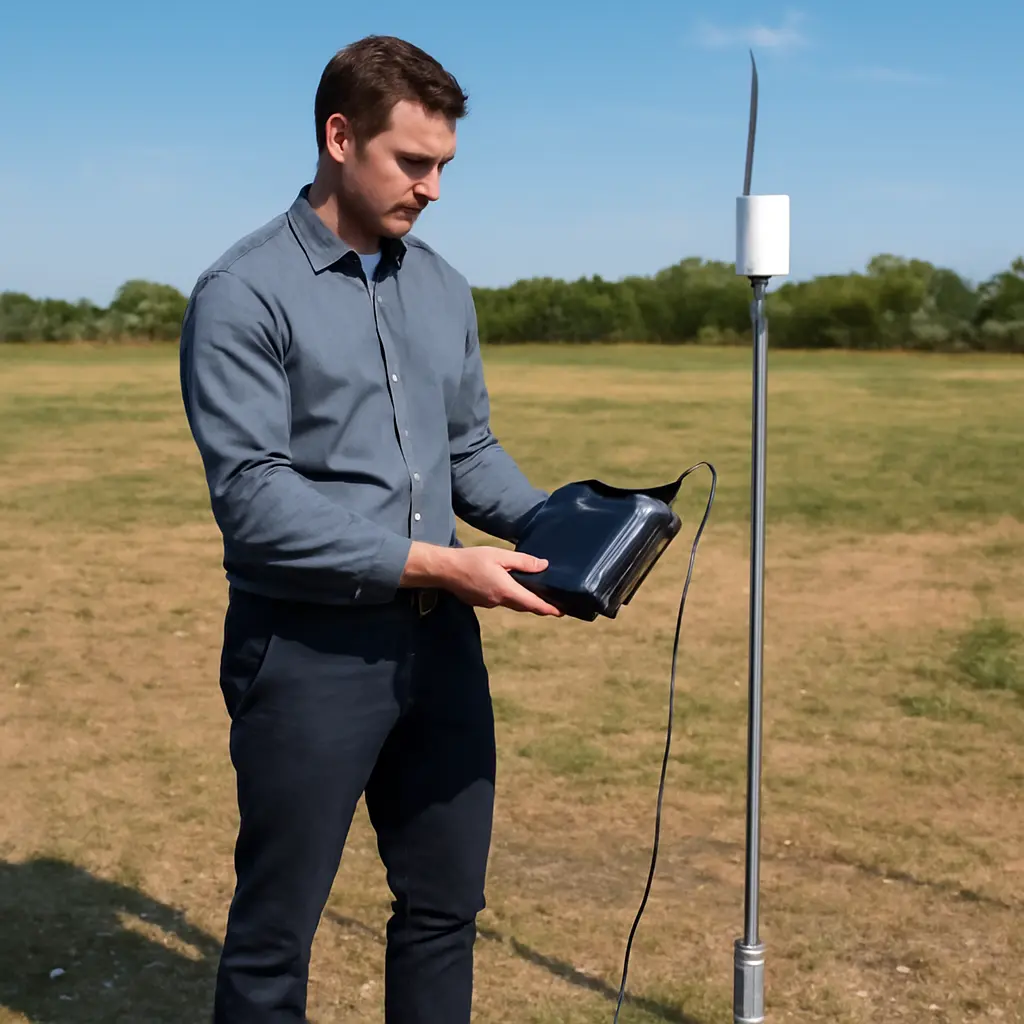
- Test representative hardware and applications in the field at edges, during movement, under peak load, and during failures.
- Establish monitoring, documentation, maintenance, incident response, and periodic reassessment after launch.
For a project review, a useful chart is a requirements-to-evidence matrix: list each target in one column, the test method in another, and the acceptance result in a third. This makes gaps visible before deployment and gives operators a baseline for future troubleshooting.
Conclusion: designing wireless systems for real conditions
The most common wireless design mistakes arise when engineers confuse ideal calculations with real-world performance: coverage is reduced to a signal-strength map, capacity is estimated from advertised data rates, interference is ignored, or reliability and security are postponed until after deployment. A dependable design defines measurable requirements, accounts for propagation and antenna behavior, plans for shared spectrum and peak traffic, protects devices and communications, and validates mobility, power, and recovery in the intended environment.
Wireless systems are increasingly essential to industrial operations, public services, and everyday connectivity, so design shortcomings can affect productivity, safety, privacy, and service continuity. Review your next wireless project against the checklist, test it under realistic conditions, and consult current standards and local spectrum authorities before deployment. Continued reading should include the relevant IEEE or 3GPP specifications, NIST wireless and IoT guidance, and the regulator’s requirements for the intended region.
Sources: International Telecommunication Union, Facts and Figures 2024, https://www.itu.int/itu-d/reports/statistics/facts-figures-2024/; Federal Communications Commission, Wireless Devices and Health Concerns, https://www.fcc.gov/consumers/guides/wireless-devices-and-health-concerns; National Institute of Standards and Technology, Wireless Networks, https://www.nist.gov/programs-projects/wireless-networks; 3rd Generation Partnership Project, Specifications, https://www.3gpp.org/specifications-technologies/specifications-by-series; IEEE Standards Association, IEEE 802 Standards, https://standards.ieee.org/; Wi-Fi Alliance, Wi-Fi CERTIFIED, https://www.wi-fi.org/discover-wi-fi; Bluetooth Special Interest Group, Bluetooth Core Specification, https://www.bluetooth.com/specifications/specs/; National Institute of Standards and Technology, NISTIR 8259A: IoT Device Cybersecurity Capability Core Baseline, https://csrc.nist.gov/pubs/ir/8259/a/final; Federal Communications Commission, Radio Frequency Devices, https://www.fcc.gov/engineering-technology/laboratory-division/general/radio-frequency-devices; Federal Emergency Management Agency, National Incident Management System, https://www.fema.gov/emergency-managers/nims; Internet Engineering Task Force, Simple Network Management Protocol (SNMP) Frameworks, https://www.rfc-editor.org/rfc/rfc3411.